

It’s crucial to understand the implications of holding a medical cannabis card while working in an environment with zero-tolerance policies. As cannabis legalization spreads, your rights as a patient and employee become more complex. You may benefit from the therapeutic effects of cannabis, yet risk disciplinary actions if your workplace prohibits any trace of it. This post will explore your rights and responsibilities, guiding you through the potential conflicts between your medical needs and employer regulations.
Overview of Medical Cannabis
Medical cannabis is increasingly recognized for its potential therapeutic benefits. It is composed of compounds called cannabinoids, primarily THC and CBD, that interact with the endocannabinoid system in your body to promote various health benefits. Conditions such as chronic pain, anxiety, epilepsy, and multiple sclerosis are among those that may be alleviated through medical cannabis use. As more people explore this treatment option, understanding its legal and practical implications becomes imperative.
Definition and Uses
Medical cannabis refers to cannabis plants or extracts prescribed for treating specific health conditions. You may find it beneficial for managing symptoms like pain, nausea, and inflammation. Research indicates that cannabinoids can help improve appetite in cancer patients or reduce seizures in those with epilepsy. While its medicinal properties are being acknowledged, the method of consumption-be it smoking, oils, or edibles-can greatly affect its efficacy.
Legal Considerations
Navigating legal parameters surrounding medical cannabis is imperative for both patients and employers. Regulations differ significantly by state, with some allowing full medical use while others have stricter limitations. You should be aware that obtaining a medical cannabis card often requires a thorough application process, generally including documentation from a healthcare provider. Importantly, your protection under the law can depend on local statutes and whether your employer maintains a zero-tolerance policy.
In states where medical cannabis is legal, protections for users can still be minimal. While your medical cannabis card may grant you the ability to use cannabis for medical purposes, it does not shield you from workplace repercussions if your employer implements a zero-tolerance policy. In fact, some states permit employers to terminate employees for cannabis use, regardless of medical necessity. It’s vital that you review both state laws and your company’s specific policies to understand potential risks associated with medical cannabis consumption on the job.
Workplace Policies and Employee Rights
Your employer’s policies regarding substance use significantly impact your rights as an employee, especially if you hold a medical cannabis card. Workplace environments often prioritize safety and productivity, leading to the implementation of various drug policies. These policies can vary widely, from strictly prohibiting any substance use, including medical cannabis, to accommodating legal medical use while upholding safety standards.
Zero-Tolerance Policies Explained
Zero-tolerance workplace policies categorically prohibit any sort of drug use, including medical cannabis, regardless of your legal status as a cardholder. These policies aim to maintain a drug-free environment and often result in immediate disciplinary action if a violation occurs. This approach can undermine your rights, particularly if your medical cannabis use is legally prescribed for a legitimate health condition.
Employee Rights and Protections
In many regions, you have rights that protect you from discrimination due to your medical cannabis use. Depending on local laws, your employer may be required to provide reasonable accommodations for medical cannabis use, provided it does not affect job performance or safety. Understanding your rights is vital, as failing to recognize them could lead to unjust termination or other penalties.
Additionally, various states have enacted legislation that shields employees from discrimination related to medical cannabis use. For example, some laws require employers to engage in interactive discussions with employees who request accommodation for their medical use. Ensure you familiarize yourself with your state’s specific regulations, as the balance between workplace safety and your rights as a medical cannabis user is often a contentious issue that requires careful navigation.
Effects of Medical Cannabis on Work Performance
Your ability to perform at work can be significantly influenced by your use of medical cannabis. While some studies indicate that patients experience improved focus, creativity, and reduced anxiety, others show impairment in cognitive functions and reaction times. This dual impact makes it vital to assess individual responses, as the effects of cannabis can fluctuate based on dosage and strain, potentially affecting productivity and workplace safety.
Potential Benefits
Medical cannabis can offer several advantages to your work performance. For instance, it may help alleviate symptoms of chronic pain or anxiety that can hinder concentration. Research reveals that about 70% of users report improved daily functioning and overall well-being, which can lead to increased job satisfaction and productivity.
Possible Drawbacks
While there are benefits, potential drawbacks of using medical cannabis in the workplace should not be overlooked. You may face decreased short-term memory and impaired judgment, which could hinder decision-making abilities. Moreover, the sociocultural stigma surrounding cannabis can adversely affect your relationships with colleagues and supervisors, possibly impacting career advancement.
When considering potential drawbacks, you must also acknowledge the individual variability in cannabis effects. Some users might experience drowsiness or reduced motor skills, particularly with higher THC concentrations, which can be detrimental in safety-sensitive jobs. Furthermore, the unpredictable nature of cannabis impacts on cognition can lead to inconsistency in performance. This unpredictability necessitates careful management and communication with employers to navigate workplace expectations effectively.
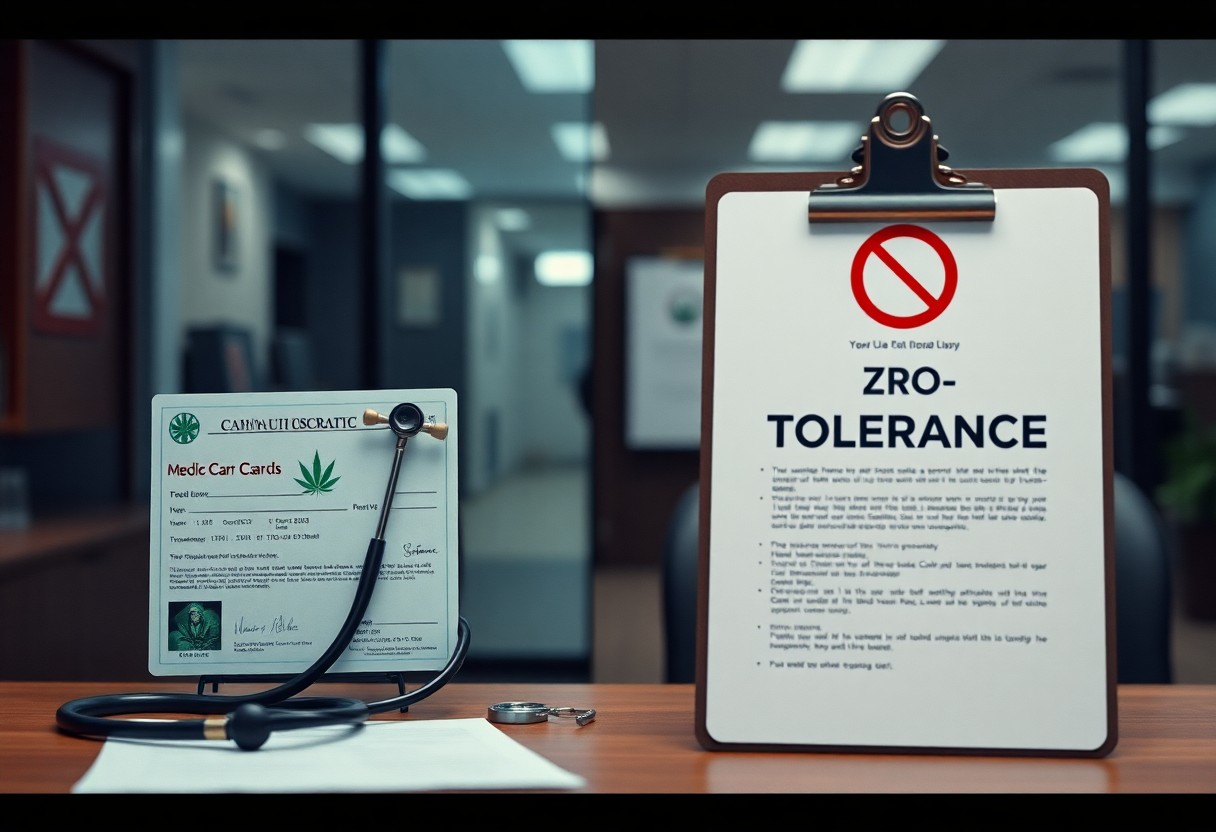
Navigating the Conflict: Medical Cannabis vs. Zero-Tolerance Policies
In an evolving legal landscape, tensions between medical cannabis use and zero-tolerance workplace policies are becoming more pronounced. Companies must assess how state laws on medical cannabis intersect with their internal policies. Proactive measures are necessary to provide a safe working environment while respecting employees’ rights. Understanding the legal implications is vital for both navigating compliance and mitigating risks.
Case Studies and Legal Precedents
Several case studies highlight the intricate balance between medical cannabis user rights and zero-tolerance policies. For example:
- Barber vs. Colorado (2015): Employer terminated an employee with a medical cannabis card; court ruled in favor of the employee, stating rights were violated.
- Coats vs. Dish Network (2015): Employee fired for using medical cannabis; the court upheld the employer’s zero-tolerance policy, emphasizing discretion based on federal law.
- Washington State: Roe vs. TeleTech Customer Care (2019): The court found the employer liable for not accommodating the medical use of cannabis.
- Maine’s Law: Requires employers to justify the termination of an employee using medical cannabis if its use doesn’t impair job performance.
Employer Strategies for Compliance
To navigate the complexities of compliance, you should consider a few strategic approaches. Start with a thorough review of your existing policies and ensure they align with current legal standards. Implement training sessions for management to understand the implications of medical cannabis laws. Additionally, establish clear communication channels for employees to discuss concerns about their medication use without fear of retaliation. By fostering a transparent environment, you can bolster trust while ensuring workplace safety.
Recommendations for Employers
To effectively manage the intersection of medical cannabis use and workplace policies, employers should develop comprehensive strategies that balance employee rights with workplace safety. Clear guidelines should be established to accommodate employees using medical cannabis while ensuring that workplace standards are upheld. This proactive approach not only helps maintain productivity but also minimizes legal risks.
Policy Development
Developing a balanced policy requires you to assess state laws on medical cannabis and integrate them into your current framework. Your policy should articulate conditions under which medical cannabis use is permissible and outline the process for employees to disclose their medical cannabis cards. Establish clear guidelines for drug testing, focusing on impairment rather than mere presence.
Training and Education
Implementing a robust training program on medical cannabis can empower your workforce and foster a safer environment. Education should cover the legal implications of cannabis use, the differences between medical and recreational use, and how to identify impairment. These sessions can significantly reduce misunderstandings and promote a culture of safety and compliance.
Offering training not only informs employees but also enhances workplace safety. Incorporating real-life scenarios and case studies can contextualize the implications of medical cannabis use, making the training relatable and practical. Furthermore, consider involving healthcare professionals to provide insights about medicinal benefits and risks associated with cannabis, ensuring that all staff are well-equipped to navigate these conversations responsibly and knowledgeably.
Recommendations for Employees
As an employee, you must navigate the complexities of medical cannabis use within a workplace that may enforce zero-tolerance policies. Understanding the legal protections afforded to you can help you advocate for your rights while ensuring compliance with your employer’s regulations.
Understanding Rights and Responsibilities
You need to familiarize yourself with both your rights under medical cannabis laws and the responsibilities outlined in your workplace policies. Many states protect medical cannabis users from discrimination; however, employers retain the right to enforce workplace safety standards and drug testing protocols, complicating your position.
Communicating with Employers
Open dialogue with your employer is vital when navigating medical cannabis use. Initiating discussions about your medical needs, while acknowledging company policies, can foster a better understanding and potentially lead to accommodations.
When discussing medical cannabis with your employer, consider scheduling a private meeting to present your situation objectively. Be prepared to share documentation from your healthcare provider to validate your need for medical cannabis. Making it clear that you are committed to maintaining productivity and safety can significantly influence how your employer views your situation, making it more likely that they will consider reasonable accommodations where possible.
Summing up
With this in mind, understanding the interplay between medical cannabis cards and zero-tolerance workplace policies is vital for you as both an employee and an employer. You must evaluate how your legal rights align with your workplace’s expectations. Ensuring compliance with regulations while maintaining a safe work environment is a balancing act that requires clear communication and a thorough understanding of both the legalities and potential consequences. Your approach should foster a supportive atmosphere where both health management and workplace safety are prioritized.
FAQ
Q: What are Medical Cannabis Cards?
A: Medical Cannabis Cards are official documents issued by state governments that allow individuals with qualifying medical conditions to legally purchase and use medical cannabis. The application process typically requires a doctor’s recommendation and proof of residency.
Q: How do Zero-Tolerance Workplace Policies affect employees with Medical Cannabis Cards?
A: Zero-Tolerance Workplace Policies prohibit the use, possession, or being under the influence of drugs, including cannabis, while on the job. Employees with Medical Cannabis Cards may still be subject to these policies, as employers often prioritize maintaining a drug-free environment.
Q: What rights do employees with Medical Cannabis Cards have in the workplace?
A: Rights vary by state, but generally, employees with Medical Cannabis Cards may be protected from discrimination for their medical use of cannabis. However, this does not guarantee protection under Zero-Tolerance policies, which may still lead to disciplinary action if violated.