

With heavy drinking, withdrawal can be life-threatening, so you should seek medical supervision rather than stopping alone; do not quit suddenly, arrange medical care, hydration, and support to increase safety and success.
Key Takeaways:
- Get a medical evaluation before stopping alcohol to assess withdrawal risk; severe withdrawal (seizures, delirium tremens) requires supervised detox and may need medications such as benzodiazepines or anticonvulsants.
- Do not quit cold turkey after long-term or heavy use; follow a medically supervised taper or inpatient program to reduce life-threatening complications.
- Arrange aftercare and support by connecting with addiction treatment, counseling, peer groups, and primary care; avoid using other sedatives or opioids to self-medicate and ensure a safe home environment.
Getting Your Mind and Body Ready
You should prepare both mind and body before detox: reduce stress, set routines, line up support, and tell a clinician if you expect severe withdrawal or have health issues.
Hydration and nutrition basics
Drink plenty of water, eat balanced meals, and include electrolytes so you give your body fuel; staying nourished helps you manage symptoms and prompts seeking medical advice if you faint or can’t keep fluids down.
Setting a clear start date
Choose a date when you can arrange support, free time, and medical supervision if needed; clear timing helps you commit and avoid temptation.
Planning your start date means you notify close contacts, remove alcohol from your space, schedule low-stress days, and book a pre-detox checkup; secure 24/7 medical access if you have heavy dependence or a history of seizures.
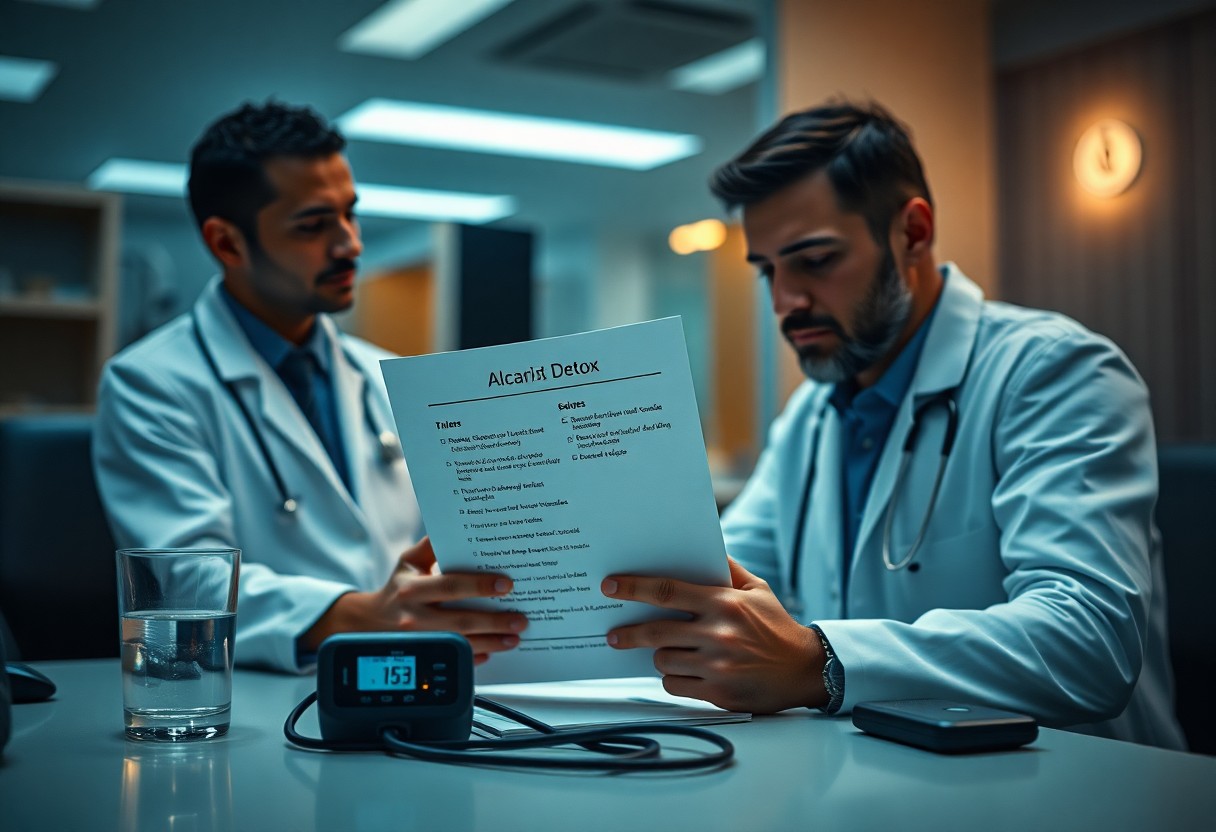
Putting Safety First with Professional Advice
Before you start detox, consult a clinician to assess safety, discuss medications, and plan monitoring-because withdrawal can be life-threatening and needs professional oversight.
Why a doctor’s visit is crucial
Your doctor can evaluate your health, prescribe medications to reduce symptoms, and arrange supervised care-reducing the risk of seizures and severe complications.
Understanding your specific risk level
Knowing your drinking history, medical conditions, and current medications lets clinicians calculate your personal risk and recommend the safest detox plan for you.
Clinicians will ask how long and how much you drink, prior withdrawal episodes, other substance use, and existing illnesses; with prior severe withdrawal, seizures, liver disease, or pregnancy, you may need inpatient monitoring to stay safe.
Creating Your Safe Space at Home
Creating a calming area by removing alcohol, locking up prescription meds, and adding soft lighting helps you stay focused. Keep emergency contact numbers visible and a water supply nearby. If you face withdrawal seizures, call medical help immediately.
Removing temptations and triggers
Remove all alcohol, mixers, and glassware from sight, including hidden bottles. Ask visitors not to bring drinks and pause delivery apps. Doing so reduces your chance of impulsive relapse.
Enlisting a trusted detox buddy
Ask a sober, dependable friend to check in or stay with you, someone who can spot severe symptoms like shaking, confusion, or fainting and call medical help if needed.
Choose someone who understands your history, agrees to a clear check-in plan, and keeps your medication list and doctor’s contact. Make sure they’ll call 911 for seizures, arrange transport if needed, and respect your privacy while offering steady support.

Important Things to Avoid (The Don’ts)
Avoid detoxing alone or using unproven remedies; withdrawal can be life‑threatening, so you should seek medical supervision and a clear safety plan.
Why going cold turkey can be risky
Stopping alcohol abruptly can provoke seizures, delirium tremens, or severe dehydration, so you should get medical assessment and monitored care.
Avoiding the DIY medication trap
Resist self‑medicating with leftover pills or internet remedies; mixing substances during withdrawal raises your overdose and interaction risk.
Consult a prescriber or addiction specialist before taking any medication; you may be prescribed a supervised benzodiazepine taper or non‑addictive aids like naltrexone or acamprosate. Avoid combining alcohol with sedatives or opioids, and call emergency services if you experience severe withdrawal signs such as confusion, high fever, or convulsions.
Knowing When to Call for Extra Help
If you develop intense tremors, confusion, vomiting, or high fever, seek help immediately; these can be life-threatening. Contact emergency services or your clinician if symptoms worsen or you feel unsafe-detox at home may become dangerous.
Recognizing severe withdrawal symptoms
Severe symptoms like seizures, hallucinations, extreme confusion, or high fever mean you should get medical help now; these signs can progress to delirium tremens, which can be fatal.
Having an emergency plan in place
Create an emergency plan listing your clinician, local emergency number, nearest hospital, and a trusted contact; keep medications, ID, and medical history accessible. Know when to call 911 and avoid driving yourself.
Include clear steps for others: list red-flag symptoms (like seizures or delirium), provide your medication list, allergies, and preferred hospital, and assign a responsible contact to act if you can’t. Share this plan with that person, keep it accessible, and state that they should call 911 immediately for life-threatening signs.
Planning for Life After Detox
Plan a clear post-detox strategy so you have appointments, stable housing, and an emergency contact list; withdrawal complications and relapse risks can be dangerous, so keep medical help accessible and a sober plan ready.
Finding long-term support groups
Join local or online groups so you can share progress, get accountability, and build routines; consistent attendance lowers relapse risk and connects you with peers who understand.
Focusing on your new healthy habits
Focus on small, sustainable habits-sleep, nutrition, and exercise-to replace drinking cues; daily routines strengthen your sobriety and improve mood.
Build habits by linking new actions to existing ones, tracking progress, and planning for triggers; when cravings hit, use alternatives like walking or calling a sponsor, and seek therapy if cravings persist-unmanaged triggers increase relapse risk.
Final Words
So you should consult a medical professional before starting detox, avoid quitting alcohol alone, get supervised care if withdrawal is severe, use support networks, and prioritize hydration and sleep for safer recovery.